Introduction
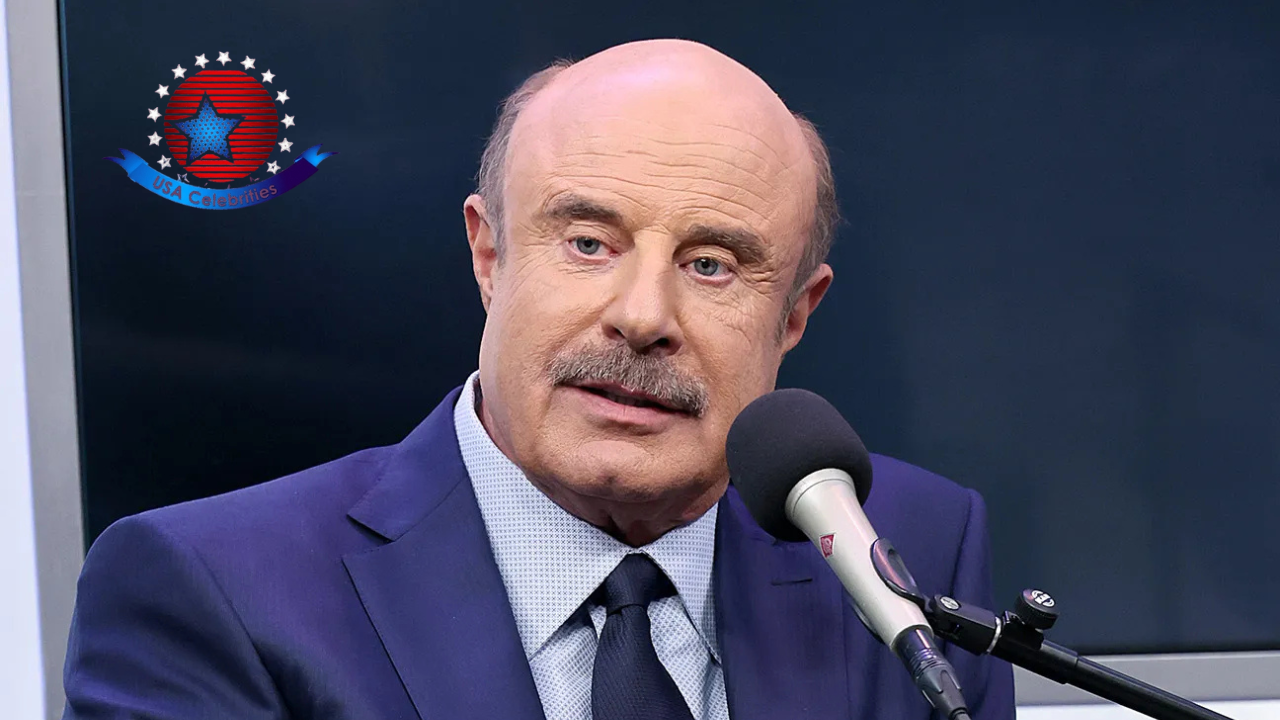
Phil McGraw, professionally known as Dr. Phil, converted formal training in clinical psychology into one of modern television’s most recognisable advice brands. Rising from a Texas private-practice background, McGraw reached national prominence through recurring appearances on The Oprah Winfrey Show in the late 1990s and launched a syndicated program bearing his professional persona in September 2002. Over two decades, his persona, books, production company, and licensing deals built a multi-headed media business: bestselling self-help titles, a production pipeline, and, most recently, his own linear/streaming network ambition.
That brand power is frequently paired with controversy. Critics argue that daytime television is an imperfect venue for mental-health interventions, while supporters point to the wide audience reach and practical advice McGraw provided. In 2024–2026, McGraw pivoted from syndication to owning distribution via Merit Street Media, a move that created new revenue opportunities and, later, big legal and financial stress. This piece is organized for both human readers and NLP-driven indexing: rich entity mentions, clear structured headings, precise timelines, and citations for the key, load-bearing facts editors must verify.
Table of contents
Quick facts (snapshot)
- Early life & education
- From therapist to TV: Oprah and the rise to fame
- The Dr. Phil show format, milestones & end of daytime run
- Books, products & business ventures (Stage 29, Merit Street Media)
- Recent business turbulence (2024–2026)
- Controversies, professional criticism & the licensing question
- Net worth & earnings (2026 view)
- Personal life & relationships
- Fun facts/trivia
Early life & education
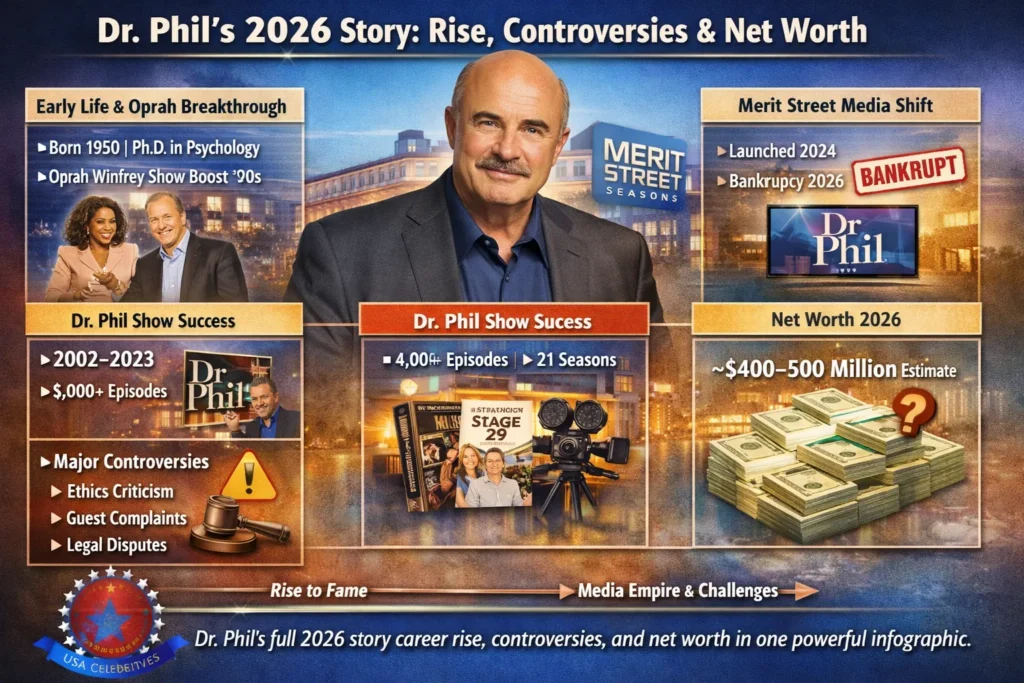
Phil McGraw was born in Vinita, Oklahoma, on September 1, 1950, and reared largely in the oil-field communities of North Texas. He attended Shawnee Mission North High School (Overland Park, Kansas) and played college football initially at the University of Tulsa before transferring to Midwestern State University, where he completed a B.A. in psychology in 1975. McGraw later earned graduate degrees (including a Ph.D.) in clinical psychology from North Texas State University (now University of North Texas) and began a professional career in private practice and litigation consulting. Those early experiences counseling clients, assessing damages, and consulting for attorneys formed the technical foundation he later adapted for media.
Oprah and the national spotlight
McGraw’s media breakout was gradual: he consulted for clients with high-profile legal issues and developed a reputation as a pragmatic, no-nonsense problem-solver. In the late 1990s, his appearances as a recurring guest on The Oprah Winfrey Show reached a mass audience and created the networked relationship that helped him launch his own syndicated program. Oprah’s platform functioned as a multiplier of exposure plus institutional credibility, which McGraw converted into book deals and syndicated television. This Oprah-era amplification is a textbook example for media strategists: a trusted platform + repeat appearances = national brand lift.
The Dr. Phil show format, milestones & end of daytime run
What the show was
Launched in September 2002, Dr. Phil was a daytime talk series that blended advice segments, interviews, staged interventions, viewer Q&A, and occasionally heated on-stage confrontations. Though framed as offering life strategies and practical guidance, the show was produced and consumed as mass-market television rather than one-on-one clinical care.
Key milestones (timeline)
- Late 1990s: Recurring Oprah appearances that built the national profile.
- September 2002: Dr. Phil syndicated launch.
- 2006: Notable licensing change McGraw ceased renewing his Texas psychology license, a fact often cited when critics discuss the ethics and professional regulation of televised interventions.
- 2023: McGraw announced that the long-running daytime syndicated series would end after 21 seasons as he shifted to other media projects.
End of daytime run & strategic pivot
In 2023, McGraw publicly framed the end of the daytime program as a transition rather than a retirement. Executives repositioned the Dr. Phil library for syndication reruns while McGraw pursued primetime specials and network ownership, an evolution from talent-for-hire to owner-operator. That pivot framed the creation of Merit Street Media in late 2023 and the network launch in April 2024.
Books, products & business ventures
Books & brand products
McGraw co-authored and authored multiple self-help titles, including Life Strategies and Relationship Rescue, that sold widely and extended the brand beyond television. Book royalties, licensed product deals, and speaking appearances were steady revenue streams during the daytime era. Historically, mainstream outlets like Forbes have listed McGraw among the higher-paid daytime personalities, reflecting the aggregated income from those channels.
Production & companies
- Stage 29 Productions: A production entity co-founded with Jay McGraw that produced Dr. Phil and related content.
- Merit Street Media (Merit TV): Launched in 2024 as a Fort Worth-based network meant to carry Dr. Phil Primetime and a slate of acquired and original programming. McGraw’s strategic logic was clear: own both content and distribution, capture library value, and negotiate carriage on more favorable terms than syndication allowed.
Recent business turbulence (2024–2026)
What happened in the quick sequence
- April 2024: Merit Street Media went live, anchored by Dr. Phil Primetime and a curated programming slate.
- Late 2024 – 2026: The network experienced layoffs, programming disputes, and carriage interruptions; local press reported cuts and an erosion of distribution relationships.
- Mid-2026 (July): Merit Street Media filed a voluntary Chapter 11 bankruptcy in Texas and simultaneously sued its distribution partner (Trinity Broadcasting Network/TCT Ministries in reporting), alleging contractual breaches and withheld distribution payments that led to unsustainable liabilities. Public reporting emphasized liabilities listed in a wide range and the immediate legal fight in bankruptcy court.
Why it matters
The Merit Street case is an instructive case study in vertical integration risk: owning distribution promises higher upside but multiplies exposure to counterparties (carriage, rights fees, production pipelines). When a partner with promised distribution commitments fails to deliver, the asset base (content library + brand reputation) can quickly be encumbered by debt, operational shortfalls, and reputational drag.
Controversies, professional criticism & the licensing question
Main lines of critique
- Therapy vs Entertainment: A sustained critique from some mental-health professionals is that televised “interventions” and confrontational advice can oversimplify complex clinical issues and exploit vulnerable participants for ratings.
- Informed consent & aftercare: Former guests and reviewers have argued that post-show support and long-term care arrangements are not always adequate.
- Commercialization: The blending of therapeutic language and entertainment raises questions about licensing, advertising, and commercial incentives.
The license issue (clear, short explanation)
Although McGraw holds a Ph.D. in clinical psychology, he discontinued renewing his Texas psychology license in 2006; California regulators previously concluded the show was entertainment rather than clinical practice, so a practicing license was not required for broadcast. This licensing timeline is central to debates about professional responsibility and the ethical bounds of televised advice.
Legal disputes and guest complaints
Over the years, some guests or associated parties have lodged complaints, and a few legal claims have become public. When reporting on specific lawsuits or complaints, link to the primary filings and avoid presenting hearsay. Editors: attach PDFs of court complaints or reliable outlet links when asserting specific factual allegations.
Net worth & earnings
Public estimates & editorial cautions
Public estimates of McGraw’s net worth vary by methodology and source. Historical reporting from Forbes highlighted very large annual paydays during peak syndication seasons (reports in prior years noted earnings in the tens of millions annually from show deals). Contemporary net-worth figures published by popular business outlets commonly place McGraw in the low-to-mid hundreds of millions, with some aggregated estimates often reported around $400–$500 million. These figures depend heavily on private valuations of production assets and any adjustments resulting from Merit Street Media’s bankruptcy and litigation. Always label net-worth numbers as estimates and date them.
Main income buckets
- Syndication fees and show revenue (historically the largest source).
- Book royalties, licensing deals, and speaking fees.
- Production company equity and library rights (Stage 29).
- New network/distribution revenue (Merit Street Media; status and near-term cash flows affected by legal actions and restructuring).
Real estate, cars & lifestyle
Public reporting indicates multiple residences consistent with a long career of high media earnings. For precise asset lists, use county property records and legal filings rather than speculative reporting. Avoid detailed claims about private residences unless they are public-record verified.
Career achievements & awards
- 21 seasons as a syndicated daytime host (2002–2023).
- Multiple bestselling books and large national exposure.
- Emmy nominations and industry recognition for production roles (verify exact nominations and years against awards databases before publishing).
Personal life & relationships
Married to Robin McGraw since 1976, the couple has two sonsJay (b. 1979) and Jordan (b. 1986). Jay McGraw has been actively involved in family production ventures. The family operates philanthropic work through named foundations and initiatives; cite charity filings for details.
Fun facts
- McGraw is a private pilot with an instrument rating.
- The Dr. Phil persona is deliberately built around a direct, “no-nonsense” brand voice that translates well to daytime TV audiences.
Social media & public presence
Official site: drphil.com (press pages, show info, and network announcements). McGraw’s brand maintains channels on YouTube, Instagram, X/Twitter, and other platforms; include follower counts with a date stamp at publication time. For broadcasting status and streaming availability, reference MeritTV channel pages and platform listings (Roku/Pluto, etc.) as appropriate.
Quick comparison table 2026)
Pros & Cons
Pros
- High public search interest; strong multimedia options.
- Reputable outlets available for sourcing (AP, People, Forbes, Wikipedia, Chron, WSJ).
Cons
- Sensitive subject areas (mental-health ethics, guest welfare).
- Rapidly changing business news (Merit Street Media legal filings) date your page and note “last updated.”
FAQs
A: McGraw announced the conclusion of his daytime syndicated run after 21 seasons; while new daytime episodes ceased, the show’s library and periodic specials continued to circulate.
A: Estimates vary; many outlets place him in the low-to-mid hundreds of millions (some around $400–$500M), but rankings depend on private valuations and may be affected by Merit Street Media’s bankruptcy. Mark figures as estimates and dates them.
A: Merit Street Media was McGraw’s Fort Worth-based network launched in 2024 to carry Dr. Phil Primetime and partner shows. In 2026, the company filed for Chapter 11 bankruptcy and sued a major distribution partner, alleging breached commitments and withheld payments; the dispute became central to the brand’s immediate future. Use court filings and reputable outlets when reporting details.
A: He earned a Ph.D. in clinical psychology but stopped renewing his Texas license in 2006; regulators and observers treat his TV work as entertainment rather than formal clinical practice. Editors: link to licensing records and the California Board of Psychology determinations when possible.
Conclusion
Phil McGraw’s career illustrates how professional credentials combined with media skills can create a major cultural and commercial brand. From his early clinical and litigation consulting work to the Oprah-era amplification and a 21-season daytime syndicated program, McGraw built a diversified media footprint books, production companies, and a move into network ownership.
The Merit Street Media episode (2024–2026) shows the risk of vertical integration: owning distribution increases upside but also concentrates operational and counterparty risk. Balanced reporting emphasizes the biographical facts (education, show timeline, earned media value) and treats sensitive subjects (therapy ethics, guest welfare, legal filings) with care and primary-source citation. Date all figures, link to filings for legal claims, and use reputable business outlets for valuation context.