Introduction
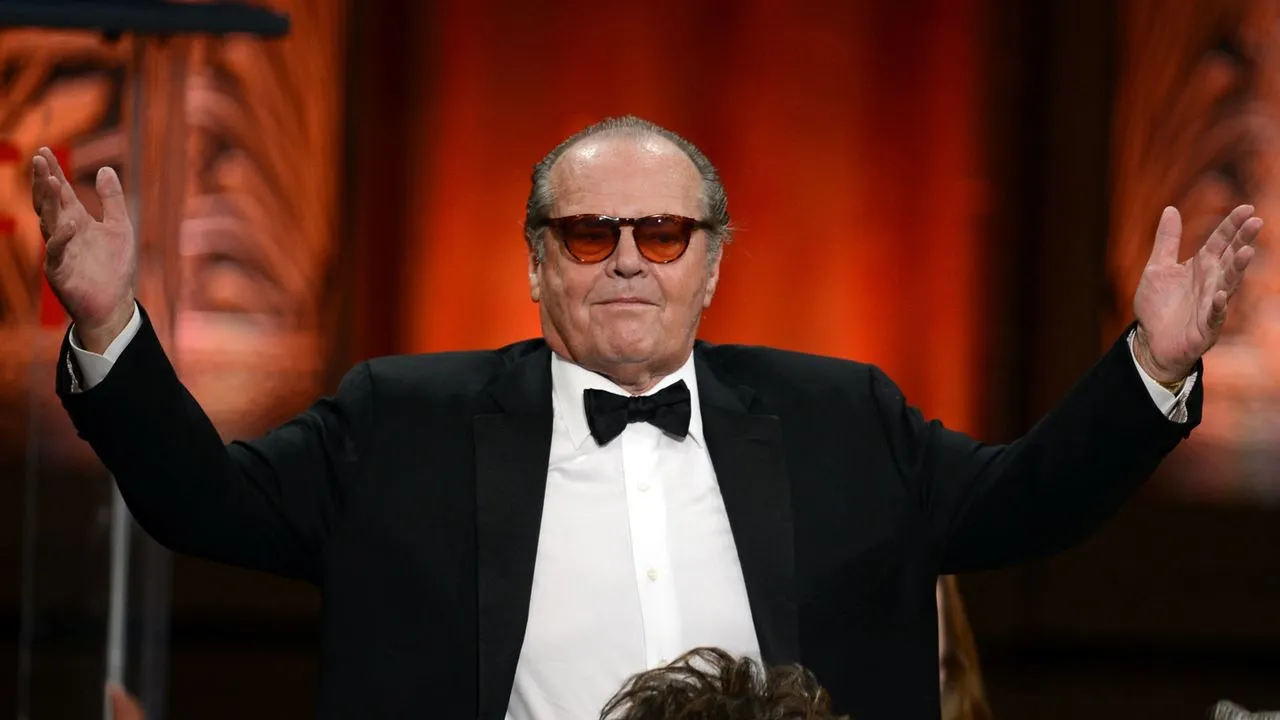
Few faces in cinema are as instantly recognizable as Jack Nicholson’s crooked grin and intense, watchful eyes. Across more than six decades, he built an unmistakable screen persona that blends charm, menace, and surprising tenderness. Nicholson rose with the New Hollywood wave, became one of the most bankable and critically respected actors of his generation, and later moved comfortably between prestige pictures and mainstream blockbusters.
Fast facts
- Full name: John Joseph Nicholson.
- Born: April 22, 1937, Neptune City, New Jersey.
- Academy Awards: Three acting Oscars (two Best Actor, one Best Supporting Actor).
- Net worth (2025 estimate): ~USD $400 million (public estimates).
- Status: Largely retired from major film roles after 2010; makes rare public appearances.
Early life & education
John Joseph “Jack” Nicholson entered the world on April 22, 1937, in Neptune City, New Jersey. Early family circumstances were complicated and have been widely reported: raised for a time by his maternal grandparents and given a different surname in public life, Nicholson’s background included small-town roots, working-class surroundings, and a series of early jobs and creative experiments. As a young man during the 1950s, he gravitated toward theatre and radio, trying his hand at acting, writing, and various film-industry tasks. Those years were not marked by instant stardom but by steady apprenticeship, small TV parts, stage work, and short film roles. He learned the nuts and bolts of low-budget filmmaking, working with regional producers and, later, Roger Corman’s production circle. Those experiences taught him economy, improvisation, and how to bring lived experience into a role, qualities that would become central to his screen persona and the kinds of characters directors sought him to play: outsiders, volatile charmers, and emotionally complex loners. For readers and publishers, this background explains how Nicholson’s real-life margins became a creative asset on screen.
Career journey decade-by-decade timeline
1950s–1960s: The long climb and first big break
Nicholson’s early years in film and television were a grind: unglamorous parts, experimental short films, and stage work that taught him timing, presence, and a taste for improvisation. In the 1960s he began to attract attention in small but vivid roles. Working with producer-director Roger Corman gave Nicholson practical filmmaking instincts on how to deliver emotionally charged moments in minimal takes and how to stand out in modestly budgeted productions. The watershed moment came with Easy Rider (1969), where his brief but memorable performance signaled an arrival to a generation of auteurs and audiences. That role plugged him into the New Hollywood network of directors and critics, shifting him from journeyman to a recognizable star whose presence could elevate a film’s emotional intensity
1970s: Creative peak and awards breakthrough
The 1970s are typically regarded as Nicholson’s creative apex. He took on roles that showcased emotional range and moral ambiguity, often playing men both charismatic and damaged. Five Easy Pieces (1970) introduced a raw, introspective screen presence that critics noticed; Chinatown (1974) demonstrated his ability to anchor a moody, tightly written noir with grace and restraint; One Flew Over the Cuckoo’s Nest (1975) was the defining role of the era a performance that fused manic energy, deep empathy, and a revolutionary spirit, and which earned Nicholson his first Academy Award for Best Actor. During this decade Nicholson became a director’s first call for parts that required equal parts bravado and vulnerability.
1980s: Range, blockbusters, and fans
The 1980s found Nicholson bridging prestige and mainstream Hollywood. His turn in The Shining (1980) is among the most studied and imitated horror performances in modern cinema; it showed his capacity to build slow-burn menace from small, precisely modulated beats. Later in the decade, he embraced a cultural change of scale in Batman (1989), where his Joker combined theatrical bravado, commerce, and a headline-making box-office presence. Nicholson’s choices in the 1980s signaled that a major star could move between arthouse credibility and mass-market spectacle without losing cachet.
1990s: Mature roles and return to awards
In the 1990s, Nicholson continued to earn critical praise, pairing his established magnetism with parts that reflected maturity and range. A Few Good Men (1992) showed his courtroom prowess and capacity to command a supporting role; As Good as It Gets (1997) gave him a late-career Best Actor win for a performance that combined comic timing with emotional insight. The decade reinforced Nicholson as a durable screen presence whose draws included both commercial clout and awards appeal.
2000s–2010s: Quiet, strong late work and stepping back
From the late 1990s into the 2000s, Nicholson carefully curated roles that allowed for depth without the grind of constant publicity. About Schmidt (2002) is an exemplar of his late-career choices: a quieter, introspective performance centered on regret and small gestures. By the 2010s, Nicholson was largely selective, appearing rarely and signaling a practical retirement from the heavy pace of earlier decades. Industry insiders and audiences now regard him as a living legend whose output is finite and whose cultural imprint is firmly established.
How we ranked the movies
We used four weighted criteria to build an ordered Top 15:
- Critical reputation: aggregator scores, major critics’ lists, and historical critical essays.
- Cultural impact: frequency of citations, iconic scenes and quotes, and influence on later filmmakers.
- Awards & nominations: Academy Awards, Golden Globes, BAFTAs, and major festival recognition.
- Staying power: continued audience interest, inclusion on “best of” lists, streaming, and home-video presence.
Best Jack Nicholson movies ranked
| Rank | Film (Year) | Role | Why it matters (short) |
| 1 | One Flew Over the Cuckoo’s Nest (1975) | Randle McMurphy | Oscar-winning, transformative lead that showcases his emotional range and charisma. |
| 2 | Chinatown (1974) | J.J. Gittes | Masterful neo-noir performance: cool, controlled, quietly furious. |
| 3 | The Shining (1980) | Jack Torrance | Horror milestone—slow-burn breakdown and an image/line that entered pop culture. |
| 4 | As Good as It Gets (1997) | Melvin Udall | Late-career Best Actor win; comedic, romantic, and emotionally nuanced. |
| 5 | Terms of Endearment (1983) | Garrett Breedlove | Supporting role with tender magnetism that earned an Oscar. |
| 6 | Five Easy Pieces (1970) | Bobby Dupea | Early breakout that revealed raw vulnerability and working-class ennui. |
| 7 | Easy Rider (1969) | George Hanson | Breakout visibility and New Hollywood credentials in an iconic countercultural film. |
| 8 | About Schmidt (2002) | Warren Schmidt | Quiet, moving late-career role centered on regret and small moral reckonings. |
| 9 | The Last Detail (1973) | Billy “Badass” Buddusky | Improvisational energy and deep character work; critical favorite. |
| 10 | Batman (1989) | The Joker | Ensemble strength and historical gravity earned praise in a large canvas. |
| 11 | Reds (1981) | Supporting | Intense, dramatic weight and critical respect for a difficult role. |
| 12 | Prizzi’s Honor (1985) | Charlie Partanna | Darkly comic and morally complex; displays his range and taste for oddball parts. |
| 13 | Ironweed (1987) | Francis Phelan | A memorable small turn in a modern classic shows he could still surprise. |
| 14 | The Departed (2006) | (Cameo) | Memorable small turn in a modern classicsh ows he could still surprise. |
| 15 | Something’s Gotta Give (2003) | (Cameo) | Playful, romantic late-career role that expanded his demographic reach. |
Top 5 deep-dive
One Flew Over the Cuckoo’s Nest (1975)
Nicholson’s Randle McMurphy is a brash, heartbreaking figure whose rebellion and fragility drive the film. The performance balances manic bravado with tender vulnerability; Nicholson’s energy gives the character contagious life and makes the film an emotional and political landmark. His Oscar-winning turn is often studied in acting classes for its combination of timing, candidness, and emotional truth.
Chinatown (1974)
In Roman Polanski’s layered noir, Nicholson’s J.J. Gittes is a weary, incisive private eye whose small, telling looks and moral fatigue anchor the film’s atmosphere of corruption and mystery. Nicholson’s restraint, a controlled simmer rather than overt spectacle, is what makes this performance enduringly watchable and a model of modern film acting.
The Shining (1980)
Nicholson constructs a slow psychological collapse in The Shining, modulating between domestic normalcy and eruptive fury. The film’s most recognizable images and lines belong in part to his committed, fearless performance. It’s an acting study in how incremental shifts and micro-beats culminate in a performance that terrifies and fascinates simultaneously.
As Good as It Gets (1997)
Here Nicholson plays a prickly novelist whose journey toward empathy is painful, funny, and ultimately humanizing. The role required comic precision and dramatic vulnerability in equal measure; Nicholson’s portrayal earned him another Academy Award and showcased his ability to make an unlikeable man sympathetic without reducing complexity.
Terms of Endearment (1983)
As Garrett Breedlove, Nicholson brought effortless charm and a human softness that contrasted with his more intense roles. The performance is succinct and emotionally resonant; as a supporting piece, it adds depth and warmth to a film that handles grief and family with tonal dexterity.
Awards nominations & milestones
Jack Nicholson is among the most decorated actors in Academy Award history. He has three acting Oscars: Best Actor for One Flew Over the Cuckoo’s Nest (1975) and As Good as It Gets (1997), and Best Supporting Actor for Terms of Endearment (1983). Over a long career, he accumulated many Oscar nominations (placing him among the most-nominated male actors), multiple Golden Globe wins and nominations, plus BAFTA recognition. Beyond awards, Nicholson’s milestones include culturally definitive turns (The Shining, Chinatown), and a profile as an actor who could both headline prestige drama and amplify blockbuster entertainment. For publishers: present a compact awards table (Year Award Film) so readers can scan quickly. That format also helps FAQ and schema parsing
Acting style, persona & cultural impact
Jack Nicholson’s acting style is often described as a blend of lived-in realism, electric unpredictability, and precise micro-expression. His strength is not a single technique but a repertoire of small behaviors: a sidelong smirk, a slight narrowing of the eyes, a timing shift that read as interior life. Directors and co-stars have praised his improvisational instincts: Nicholson frequently found line readings and tiny beats on set that became essential to a scene. That improvisational spark works alongside a persona that combines roguish charm with an underlying capacity for menace; many of his most interesting characters sit on the border between likeability and danger.
Three quick style notes publishers can reuse as pull-quotes or bullets:
- Improvisational spark: Nicholson often supplied small but crucial beats that were not scripted.
- Charm + threat: He excelled at characters who alternate between warmth and volatility.
- Everyman to monster: He moved comfortably from sympathetic outsiders to terrifying, unhinged figures.
Culturally, Nicholson’s image, the grin, the furrowed brow, and the ability to deliver a single unforgettable line have been widely recycled in film training, documentaries, and popular references. His Joker contributed to the late-1980s comic-book movie spectacle; his McMurphy became shorthand for charismatic rebellion; his Torrance entered the horror lexicon. For publishers, including quotes from directors, critics, and acting teachers will increase EEAT and enrich the page.
Streaming & home video
Important: streaming availability changes rapidly. Best practice for publishers is to embed a region-aware streaming-availability widget (JustWatch, Reelgood) and display a Last checked date.
Quick guidance for editors and readers:
- The Shining often appears on rotating subscription platforms and is widely available for rental or on physical Blu-ray.
- Chinatown is frequently licensed to premium services or available to rent/purchase.
- One Flew Over the Cuckoo’s Nest shows up on classic-film platforms or at rental outlets.
- As Good as It Gets is commonly available via paid platforms and for digital purchase.
- Batman (1989) is broadly licensed and often visible on major streaming storefronts or studio platforms.
Lesser-known roles, cameos & fun trivia
Small facts that readers and fans love:
- Nicholson was a longtime courtside fixture at Los Angeles Lakers games and is associated with celebrity NBA culture.
- He is an avid art collector and has owned important modern works.
- His deal for Batman reportedly included a lucrative backend percentage, illustrating his star power in the 1980s.
- He made small, surprising cameos late in his career that film fans enjoy spotting; those brief moments often became headlines because of his stature.
Net worth assets & lifestyle
Public reports commonly place Jack Nicholson’s net worth in the hundreds of millions. Much of this estimate reflects decades of high-value film contracts, smart real-estate transactions, and a notable art collection. When publishing monetary estimates, use careful language: “estimated” and cite your source with a date. Avoid implying access to private financial records. As a publisher, add a small footnote for net-worth figures (source + date of estimate) and place the number in a boxed layout to prevent misreading. Because these figures can vary across outlets, add a short sentence explaining the calculation basis: film pay, backend box office deals, property holdings, and art investments.
Relationships & personal life
Nicholson has been a high-profile figure whose private life occasionally attracted media attention. Over the years, he has been linked to several well-known partners and has been a recognizable presence at public events. In later life, he purposely stepped back from the spotlight. When covering living persons, follow libel- and privacy-safe practices: rely on authoritative sources, avoid repeating speculative claims, and prioritize documented facts. Keep tone respectful and fact-focused: readers want context, not gossip.
(FAQs)
A: Jack Nicholson was born April 22, 1937. Update the age automatically on the site with a simple script that calculates the current year from the birthdate.
A: He has won three Academy Awards for acting: One Flew Over the Cuckoo’s Nest, Terms of Endearment (Supporting), and As Good as It Gets.
A: He has not taken major film roles since around 2010 and makes very rare public appearances. Many reputable sources describe him as effectively retired, though that term should be used carefully unless an official statement exists.
A: Critics and audiences most often cite One Flew Over the Cuckoo’s Nest, Chinatown, The Shining, As Good as It Gets, and Five Easy Pieces among his best.
A: Availability changes by country. For the most accurate results, embed a streaming-availability tool (JustWatch or Reelgood) and keep the “last checked” date visible. For classic titles, also check rental services and physical-disc retailers.
Final editorial & legal cautions
- Living persons: Always use reputable sources and avoid rumors. If including personal health or financial assertions, qualify them clearly as estimates.
- Streaming claims: Add “last checked” dates near any availability statements. Prefer dynamic widgets.
- Net worth: Label as “estimated” and cite the source and date.
- Images: Avoid copyright infringement: use licensed images or create original artwork. Add alt text and captions.
Conclusion
Jack Nicholson’s career reads like a roadmap of modern American cinema: from gritty, low-budget apprenticeship to towering, award-winning performances that reshaped how actors inhabit complicated men. Across more than six decades, he moved effortlessly between volatility and tenderness, indie grit and studio spectacle, earning a rare combination of critical esteem and mass appeal. His landmark roles from Randle McMurphy’s intoxicating rebellion to Jack Torrance’s slow unravelling and Melvin Udall’s late-life tenderness reveal an actor who mined small behavioral truths to create unforgettable characters. For readers, Nicholson is both an acting masterclass and a cultural touchstone; for publishers, his catalogue offers evergreen content opportunities that reward careful sourcing, timely streaming updates, and strong visual assets.