Introduction
Few bands have traveled a creative arc as sharp and influential as The Police. Emerging from London’s late-1970s punk scene, the trio of Sting, Andy Summers, and Stewart Copeland fused reggae, new wave, rock, and art-pop into a sound that felt both experimental and effortlessly commercial. Across five studio albums more adventurous than the last, the band evolved from raw, angular energy to widescreen, chart-topping sophistication, culminating in Synchronicity, a global No.1 phenomenon that cemented their impact on modern music.
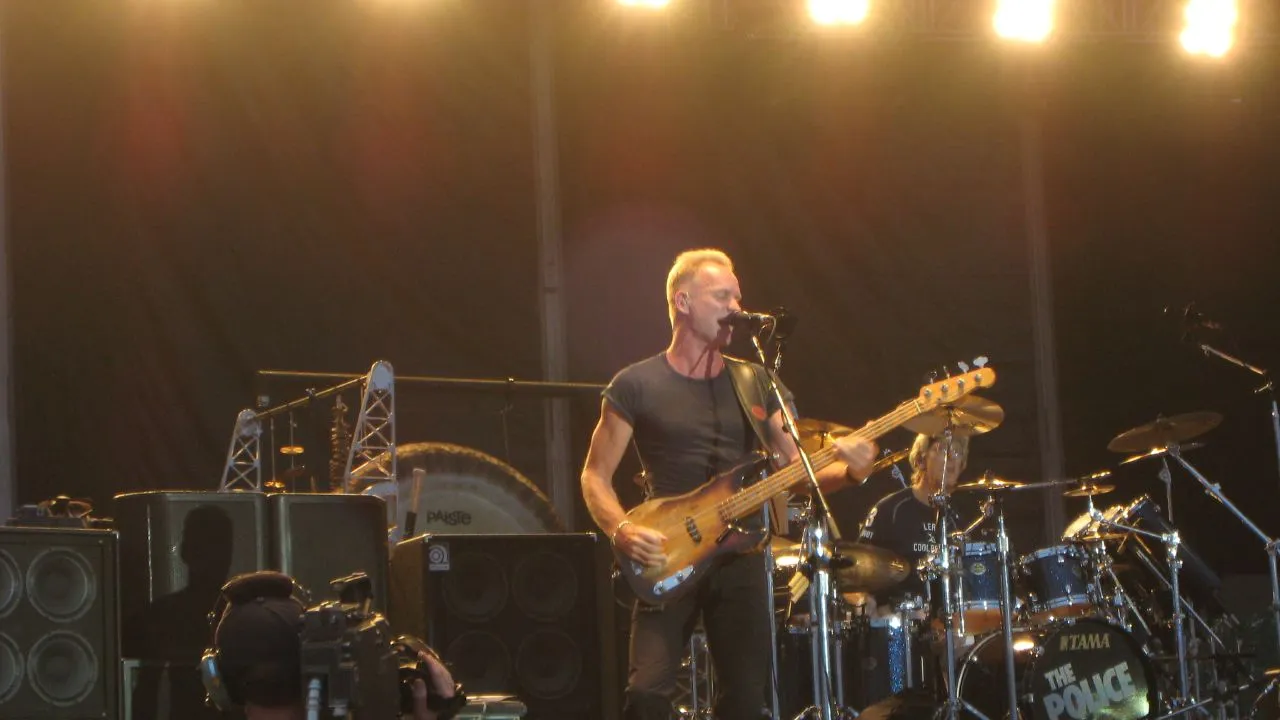
Although The Police disbanded at their commercial peak, their influence only intensified: Sting’s solo career reshaped pop; Summers’ textural guitar style became a blueprint for alternative rock; and Copeland’s rhythmic innovations inspired generations of drummers. Their massive 2007–08 Reunion Tour, selling out stadiums worldwide, proved the trio’s legacy had only grown larger.
Today, The Police remain one of the most studied and celebrated bands of the late 20th century, an essential reference point for sound, songwriting, and the business of global stardom. This guide explores their full history, albums, milestones, and lasting cultural imprint.
Quick facts at a glance
- Full name: The Police.
- Core lineup: Sting (Gordon Sumner) lead vocals & bass; Andy Summers guitar; Stewart Copeland drums.
- Formed: 1977 (London).
- Major studio albums: Outlandos d’Amour (1978); Reggatta de Blanc (1979); Zenyatta Mondatta (1980); Ghost in the Machine (1981); Synchronicity (1983).
- Big themes/sounds: new wave, reggae-rock, post-punk, literate songwriting, tight trio arrangement.
- Commercial moment: 2007–08 Reunion Tour stadiums worldwide, huge grosses, and revived interest.
Early life & formation (1976–1978)
The Police began in a restless late-1970s London scene. Stewart Copeland, an American-born drummer with a background in progressive and art rock, met Gordon “Sting” Sumner through the local circuit. Early line-ups included guitarist Henry Padovani; later, Andy Summers joined, shaping the classic three-piece sound. Their shows landed in small punk venues and clubs. Punk gave them raw energy; reggae gave them groove; pop songcraft gave them hooks. The result was compact, immediate music that crossed scenes and radios.
Why this mattered: the trio blend was unusual, a tight rhythm section, a guitar that could be both sparse and textural, and a voice that wrote literate, story-driven songs. That mixture let them become both critics’ favorites and chart stars.
Career journey: the big phases
Breakout: Outlandos d’Amour & the singles (1978)
Debut album highlights: “Roxanne” and “Can’t Stand Losing You.” The band mixed reggae beats with urgent pop hooks. Early radio play, plus their live energy, pushed the band beyond punk clubs into mainstream attention.
Consolidation: Reggatta de Blanc (1979)
The band tightened its songwriting and gained confidence. Hits like “Message in a Bottle” and “Walking on the Moon” proved they were not a one-hit act; they could write precise, memorable songs.
Global growth: Zenyatta Mondatta & Ghost in the Machine (1980–1981)
The band widened production, added more studio depth, and wrote songs that fit both UK and US radio. “Don’t Stand So Close to Me” and “Every Little Thing She Does Is Magic” became global hits. Ghost in the Machine added synths and saxophone textures.
Peak: Synchronicity (1983)
Polished production, tense studio sessions, huge sales. “Every Breath You Take” became one of the most-played songs in pop history. Tensions in the band were visible during recording; the success helped cement their place in rock history, but also marked the end of the trio’s full-time collaboration.
Split & solo careers (1984 onward)
By the mid-1980s, the group activity slowed. Sting launched a major solo career; Andy Summers and Stewart Copeland pursued other projects. The Police catalog remained valuable: radio staples, sync licenses, and later reissues kept the band in the public eye.
Albums comparison table quick reference
| Album | Year | Chart highlights | Signature tracks | Why it matters |
| Outlandos d’Amour | 1978 | UK Top 10 | “Roxanne”, “Can’t Stand Losing You” | Raw debut; introduced reggae-rock mix. |
| Reggatta de Blanc | 1979 | UK #1 | “Message in a Bottle”, “Walking on the Moon” | Confident songwriting; first major #1. |
| Zenyatta Mondatta | 1980 | Strong international sales | “Don’t Stand So Close to Me”, “De Do Do Do, De Da Da Da” | Broader radio reach. |
| Ghost in the Machine | 1981 | High charting | “Every Little Thing She Does Is Magic”, “Invisible Sun” | Denser production; synths & sax. |
| Synchronicity | 1983 | Worldwide blockbuster | “Every Breath You Take”, “King of Pain” | Artistic & commercial peak; sync gold. |
Album deep dives
For each album: short history, standout tracks, production notes, how it sounds today, and editorial angles (playlists, sync opportunities, listicles).
Outlandos d’Amour (1978) The arrival
- Key feel: raw, urgent, rhythm-first.
- Standout: “Roxanne” slow build, memorable hook, Sting’s phrasing.
- Production: lean, live-feel.
- Today: still immediate; the arrangements feel economical and direct.
- Angles: “How ‘Roxanne’ became a modern standard”; “The Police’s reggae influence explained.”
Reggatta de Blanc (1979). The consolidation
- Key feel: confident, concise.
- Standouts: “Message in a Bottle”, “Walking on the Moon”.
- Production: cleaner mixes, melodic focus.
- Today: perfect for new listeners, strong hooks,,s and accessible rhythms.
- Angles: “Best Police songs for new fans”; playlist placements for upbeat sets.
Zenyatta Mondatta (1980) The radio record
- Key feel: pop polish, tighter production.
- Standouts: “Don’t Stand So Close to Me”; “De Do Do Do, De Da Da Da”.
- Production: layered vocal harmonies and more studio polish.
- Angles: radio-ready singles and cross-format hits.
Ghost in the Machine (1981)
- Key feel: darker, more textural; synths & sax.
- Standouts: “Every Little Thing She Does Is Magic”, “Invisible Sun”.
- Production: denser arrangements; more experimentation.
- Angles: songs for film/TV that need moodier textures.
Synchronicity (1983)
- Key feel: polished, cinematic, tightly arranged.
- Standout: “Every Breath You Take” is a global No. 1 and a sync favorite.
- Production: high gloss production, careful layering.
- Angles: deluxe reissue coverage; analysis pieces on lyrical tension vs. musical sweetness.
Signature songs explained
- “Roxanne” is a slow-building classic showing The Police’s storytelling and atmosphere.
- “Message in a Bottle” instant hook; concise pop craft.
- “Don’t Stand So Close to Me” is radio-ready and lyrically nuanced.
- “Every Little Thing She Does Is Magic” is bright, piano-led, endlessly playlistable.
- “Every Breath You Take” is commercially massive and often misunderstood; the lyrics read as possessive rather than romantic, which makes it a frequent subject for cultural analysis.
Sound, influences & musical innovations

The Police are a model of genre-bridging: punk’s energy, reggae’s offbeat syncopation, and pop’s melodic focus. Stewart Copeland’s drumming uses tight hi-hat patterns and syncopation; Andy Summers’ guitar adds chiming textures and effects; Sting’s bass and voice often carry both rhythm and melody. As a three-piece, each part mattered no excess. That compactness made each part memorable and gave them wide playlistability across new wave, reggae-rock, and pop.
LSI terms you’ll see often: new wave, reggae rock, post-punk, trio format, rhythmic syncopation, studio remaster, archival box set, songwriting credits, royalties, deluxe reissue.
Tours, reunion & commercial milestones
2007–08 Reunion Tour
- One of the biggest comeback tours: stadiums across the world, very high grosses, and renewed catalog interest. The tour proved that nostalgia plus high production still sells at scale.
Why catalog music matters now
- Legacy acts monetize through reissues, box sets, streaming playlists, and sync licensing. Editors can write fresh angles like “How the Synchronicity reissue shows the money in catalog music” or “Why reunion tours still work for legacy bands.”
Recent reissues & timely hooks
Synchronicity reissue campaigns in 2024–2025 brought interviews, unreleased outtakes, and fresh essays. Those reissues create a freshness signal for evergreen content. Add a “Last updated” date to your article and a short “What’s new” callout summarizing bonus tracks, live cuts, and any official commentary.
Editorial idea: Republish your Police pillar with a “What’s new in the Synchronicity reissue?” callout. That attracts both fans and search traffic.
Money, rights & the 2025 legal update
Legal note (2025): In August 2025, news outlets reported that Andy Summers and Stewart Copeland filed a writ in a UK court alleging they were denied certain songwriting credits and royalties, with reporting centered on “Every Breath You Take.” When covering legal stories, be neutral, stick to reputable reporting, and say alleged unless a court rules otherwise. Legal developments make good news hooks and can drive readers back to an evergreen page.
Listen/buy guide
Where to stream: embed official artist pages on Spotify and Apple Music.
Start-here playlist (8–12 songs): “Roxanne”, “Message in a Bottle”, “Walking on the Moon”, “Every Breath You Take”, “King of Pain”, “Don’t Stand So Close to Me”, “Every Little Thing She Does Is Magic”, “Synchronicity II”.
Physical buys & merch: recommend remastered deluxe editions, Synchronicity box set, and official vinyl pressings. Link to official stores for merch and authorized reissue bundles (affiliate potential).
Quick listening roadmap
| Mood / Goal | Song(s) | Why |
| Start fast | Roxanne; Message in a Bottle; Every Breath You Take | Hits that span their career. |
| Reggae/groove | Walking on the Moon; So Lonely | Off-beat feel and syncopation. |
| Textures & depth | Synchronicity II; Invisible Sun | Denser production and mood. |
| Live energy | Bring On The Night (live) | Trio chemistry and stage tension. |
Pros & Cons
Pros
- Tight trio chemistry produced durable songs.
- Genre-bridging made them playlist-friendly across formats.
- Strong catalog for playlisting, Film/TV Sync, and deluxe reissues.
Cons
- Internal tensions and legal disputes complicate the band’s narrative.
- A few mega-hits, especially “Every Breath You Take,” can overshadow the rest of the catalog.
- Ongoing 2025 legal disputes require neutral, careful language.
FAQs
A: The Police formed in London in 1977.
A: The classic trio: Sting (lead vocals, bass), Andy Summers (guitar), and Stewart Copeland (drums).
A: Five studio albums: Outlandos d’Amour, Reggatta de Blanc, Zenyatta Mondatta, Ghost in the Machine, and Synchronicity.
A: The lyrics can be read as possessive or surveillance-like rather than romantic. Its enduring success also means the song features in legal and royalty discussions; consult reputable news outlets for the latest developmentsperformance, monitoring, analytics, GA, GTM, console, logs.
A: Yes, the 2007–08 Reunion Tour sold millions of tickets and grossed in the hundreds of millions, making it one of the most profitable reunion stadium tours of its time.
concolusion
The Police remain one of the most influential bands of the modern era, a trio whose sharp songwriting, innovative rhythms, and genre-blending sound reshaped rock, punk, And New Wave. Their five-album run from 1977 to 1983 still defines excellence in concise, high-impact music, while their reunion tour and continued cultural relevance prove the timelessness of their work. Whether through Sting’s solo impact, Summers’ guitar innovations, or Copeland’s rhythmic fingerprint, The Police’s legacy continues to inspire musicians and audiences around the world.